Researcher Spotlight: Searching for Genetic Clues to Chemotherapy-Induced Nerve Damage
September 9, 2026Thu Pham, a PhD candidate at the University of California, San Francisco, aims to understand why some cancer patients develop severe nerve damage from chemotherapy while others do not.
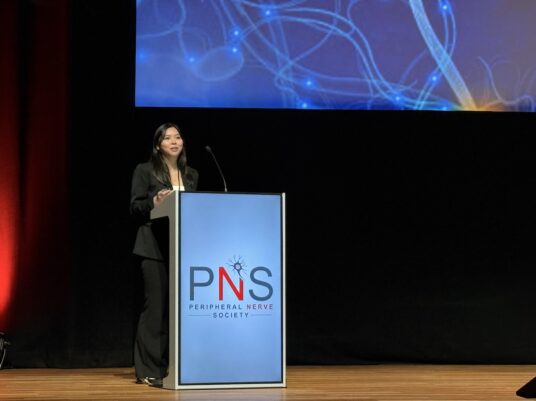
If Thu Pham wasn’t a scientist, she’d be a professional organizer. Inspired by the TV show The Home Edit, the PhD student enjoys transforming chaos into aesthetically pleasing order.
“I could do that for the rest of my life because that’s what I do for the lab as well,” said Pham, who is studying pharmaceutical sciences and pharmacogenomics at the University of California, San Francisco. “I organize all the beakers as my way to decompress and de-stress.”
Yet neither scientist nor organizer were her career goal when she entered college. Pham wanted to be a health care provider, so she spent years volunteering at a nonprofit that provides free medical care to underserved populations in Sacramento.
During her volunteer work, she saw some patients’ health deteriorate because they were unable to stick to strict medication schedules while juggling jobs, family responsibilities, and other daily challenges. “Instead of trying to convince the patients that you have to comply to this medication, I had this very naive thought: What if I just changed the drugs myself?” Pham said.
That’s the moment she decided to pursue her PhD instead of going to medical school. Now a fourth-year PhD candidate, Pham received a 2026 PhRMA Foundation Predoctoral Fellowship in Translational Medicine for her research seeking to understand why some cancer patients develop severe nerve damage from chemotherapy while others do not.
Chemotherapy-induced peripheral neuropathy (CIPN) is a condition that causes numbness, tingling, pain, and weakness in the hands and feet, making everyday tasks difficult and sometimes causing patients to reduce or stop life-saving chemotherapy.
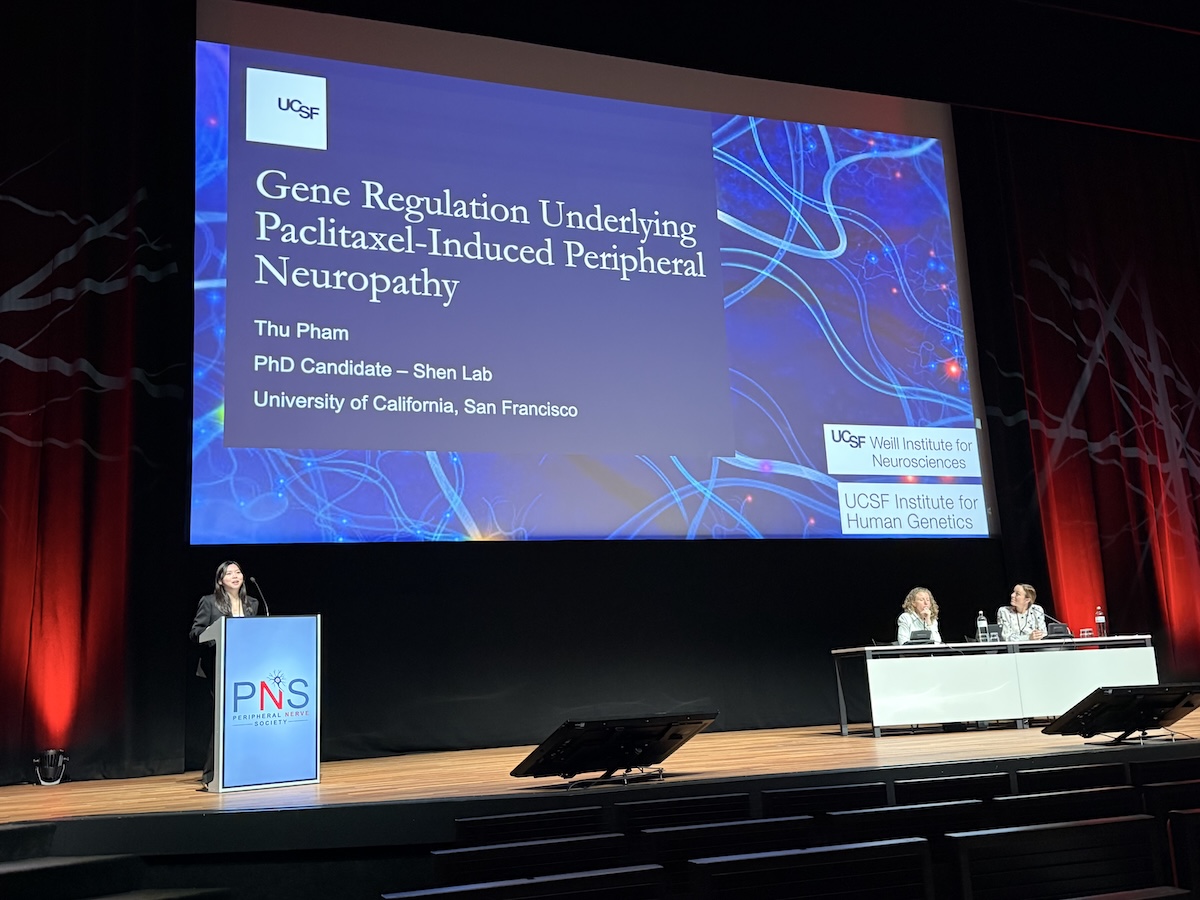
Pham is examining how a person’s genetic makeup influences their risk of developing CIPN, focusing on understudied regions of the human genome. If researchers can identify genetic mutations linked to CIPN, then future cancer patients could be screened for these markers before beginning treatment, so physicians and patients can select therapies or care strategies that reduce the risk of severe nerve damage.
“I’m very grateful for the PhRMA Foundation award and its financial support for this research, especially because there’s a lot of uncertainty in federal funding right now,” Pham said.
As she works to advance her science, Pham has been learning how to pitch her research to audiences outside of academia, such as business leaders and donors. “In science, it’s similar to other fields where you have to know the right people at the right time and network to advance yourself,” she said. “It’s not just about working at the bench or at my office computer. It’s about getting perspectives from people in the business field or in a non-science field that can help bring my research closer to patients.”
Pham is also passionate about inspiring the next generation of scientists. She has mentored high school and undergraduate students from diverse backgrounds, including a student refugee from El Salvador who decided to pursue science after shadowing her in the lab for two months.
“I really love to show young people that science is exciting and accessible and something that they can also see themselves being a part of,” she said. “If I can just spark the same curiosity in someone else, that is just as rewarding as this research itself.”
 Outside of the lab, Pham loves doing yoga and meditating in the morning, which helps her manage stress and anxiety. She wishes she could tell her younger self not to worry so much and that it’s OK to not have everything figured out. “The challenges you face will one day become this source of strength and resilience that will make you a better person,” she said.
While Pham is still considering her career options, she sees herself in a more non-traditional role such as regulatory science at the Food and Drug Administration or consulting in the venture capital space. In the near future, she hopes to secure an internship in the pharmaceutical industry to explore that path. “I want to talk to people, inspire people, and make a long-lasting impact,” she said. “I just have to figure out where I want to put that impact.”