Researcher Spotlight: Investigating Insurance Barriers to Obesity Care
September 16, 2026Emeka “Elvis” Duru, a PhD student at the University of Utah, is researching how insurance coverage policies hinder patient access to new GLP-1 medicines for treating obesity.
Working as a pharmacist in Nigeria, Emeka “Elvis” Duru watched some of his patients go without their medications because they could not afford them.
“I’ve experienced worsening disease cases and even one death of someone that I had built a relationship with,” Duru said. “He would come in for his diabetes medication and would always complain about the out-of-pocket cost. He passed away.”
Duru felt frustrated knowing that even though effective treatments existed, his patients weren’t benefiting from them. “If patients cannot afford it, if the insurance does not cover it, then what’s the point?” he said.
These experiences changed the trajectory of Duru’s career, fueling his desire to conduct research that could help create more equitable and effective health care policies. He volunteered as a research assistant without pay for a pharmacoepidemiologist to get the research experience that he needed to get into a PhD program in the United States.
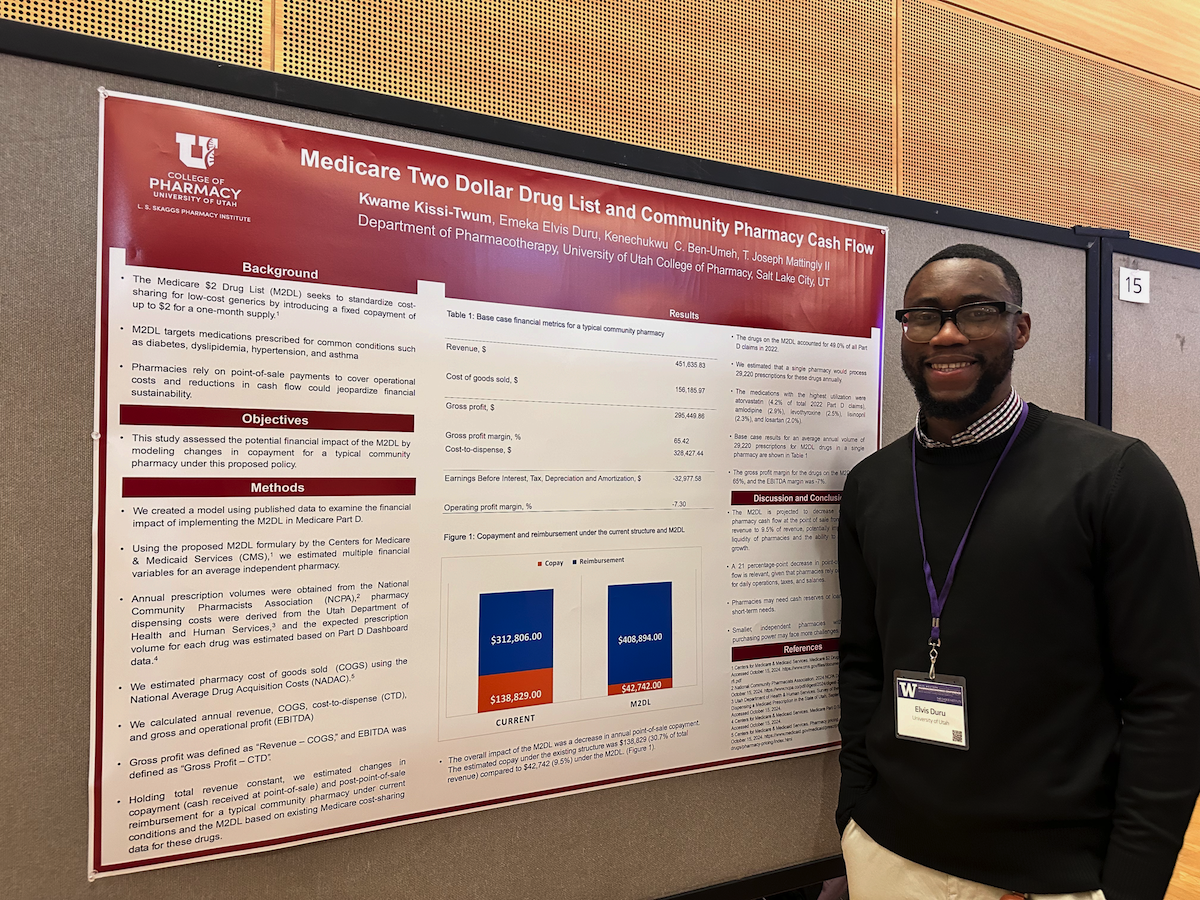 Duru is now a PhD student at the University of Utah and a recipient of the 2026 PhRMA Foundation Predoctoral Fellowship in Value Assessment and Health Outcomes Research. His research focuses on insurance coverage policies that hinder patient access to new GLP-1 medicines for treating obesity. Some plans do not cover these medicines for weight loss, while others require extra paperwork, appeals, or high out-of-pocket payments.
First, Duru is interviewing patients and health care providers about their experiences with denials, delays, appeals, and unaffordable costs. “On the patient side, I want to hear how they’re able to navigate and cope with the insurance barriers,” he said. “And, on the other hand, doctors who prescribe these medications, they’ve seen medical decisions being taken away from them.”
Duru also plans to conduct a discrete choice experiment to learn which insurance features people value most and what they would pay for better coverage. “We take a lot of consumer feedback on how we can make various products better,” he said. “But when it comes to insurance, it’s almost as though the consumers, the purchasers of this insurance, are never consulted.”
Finally, he will analyze national health data to see whether people with obesity or poorer health face less generous coverage and greater financial burden. He hopes this research can help insurers, employers, and policymakers design coverage that makes obesity care more affordable and equitable. “The big question is, how do we design insurance coverage in a way that makes effective treatments realistically accessible to the people who need it?” Duru said.
He emphasized the importance of directly involving patients and providers in his research and cited his mentor, Joey Mattingly, for guiding his efforts. “I admire Joey so much because of the way he thinks,” Duru said. “He doesn’t just do a research project because it’s what everybody else is doing or it’s a method that he wants to explore. He cares most if the research question is really policy relevant.”
Duru recalled that during his dissertation proposal, he was asked whether he chose a research question because he knew the data was available to answer it or whether he came up with a research question and then went to look for the data. “That caught me off guard because I proposed that aim because we had the data available. It was data that was actually driving the question, not the question determining the kind of data I would use,” Duru said. “So, I had to make a serious revision, and that’s what I love about the kind of research that I’m doing now. It’s trying to answer and ask questions that matter to real people — patients and providers.”
Looking back on his journey, Duru remembers how overwhelming his first year in the PhD program was, but he found that consistency and commitment are the keys to success — and that goes for more than just research.
“It’s never too late to try out new things,” he said. “I sing and play the piano. I started learning as an adult a few years ago, and I’ve gotten very good at it. No matter how hard it is, be committed to it. By the time next year comes, you will look back and realize how far you’ve come.”
As far as future career goals, Duru wants to join the pharmaceutical industry working in health economics and outcomes research. “I want to help shape how treatments are valued, covered, and ultimately accessed by patients,” he said.
By focusing on the real-world barriers patients face, Duru hopes his work can help make effective treatments more accessible to the people who need them most.