Q&A with Kelly O’Rourke: Following Her Passion for Drug Discovery, One Puzzle Piece at a Time
September 28, 2026Kelly O’Rourke, a PhD student at Vanderbilt University, received a 2026 PhRMA Foundation Predoctoral Fellowship in Drug Discovery.
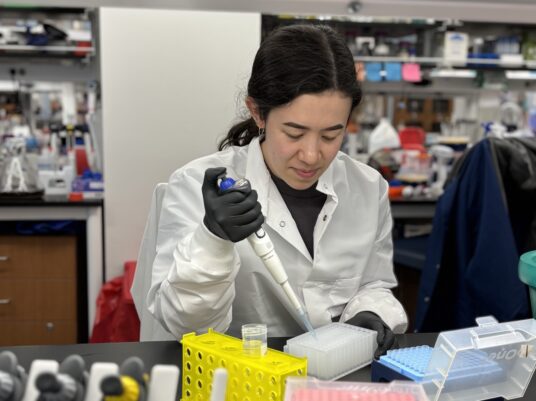
Provide a summary of your PhRMA Foundation-funded research.
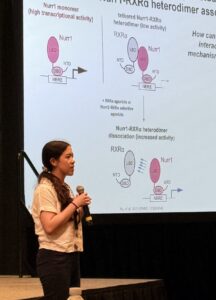
Parkinson’s disease occurs when neurons that produce dopamine, a chemical messenger that helps control movement, gradually die. As dopamine levels drop, people can experience symptoms such as tremors, stiffness, and difficulty moving. While treatment options exist, many become less effective over time as patients develop tolerance to them. My research focuses on a protein called Nurr1, which plays an important role in the development and maintenance of dopamine-producing neurons, including by activating protective genes. My project aims to study how Nurr1 activates these genes and where it functions within cells. I have developed a method to study the interaction of Nurr1 with another protein, allowing me to test how different molecules affect their interaction. By uncovering how Nurr1 works, this research could help identify new ways to protect dopamine-producing neurons and lead to new treatments for Parkinson’s disease and other neurodegenerative disorders.
Why did you pursue this specific research?
Growing up, I always had a strong interest in the life sciences, which led me to pursue a bachelor’s degree in biology. After graduating, I wanted to work for a few years before deciding whether to pursue graduate school. I worked at a biotechnology company as a research associate, where I focused on target identification using a novel high-throughput screening platform. I loved the fast-paced environment, the collaboration between the discovery, biology, and chemistry teams, and working to target “undruggable” disease-relevant proteins. This experience gave me a strong interest in early drug discovery and clinically relevant research. In my first year of graduate school at Vanderbilt University, I rotated in four labs and realized that my interests truly lay in high-throughput screening and drug discovery. I wanted to study a complex system with potential for therapeutic discovery, and my current lab and project provided a great opportunity to gain valuable training and follow my interests.
 Tell us about a turning point in your career journey.
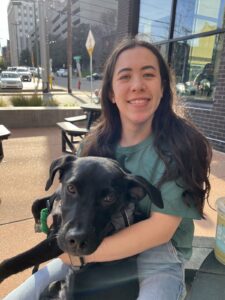
While working in industry after graduating from Northeastern University, I had a mentor who encouraged me to apply to graduate school, even though I felt intellectually fulfilled in my job. I will always be grateful for his support and guidance. One of his most memorable pieces of advice: Do not get a dog during graduate school. I really took that to heart — for all of five months. One day, while visiting a local animal shelter, I fell in love with and adopted a puppy named Goose. I quickly understood my mentor’s point. Balancing graduate school and dog ownership has been challenging at times, but it has also been extremely rewarding. While this story is not about science, it reflects how I’ve grown in the way I process advice and information and apply it to my own experiences. I value and rely on the guidance and experiences of my mentors, advisors, and peers, while understanding that learning can also come from taking risks and navigating unfamiliar circumstances.
What is a common misconception people have about science?
People may think that science follows a rigid, linear process. Although the scientific method is often represented as a flowchart, research rarely progresses in a straightforward fashion. Scientists may explore several possible explanations for a phenomenon, and unexpected findings can lead to many new directions. Through a process of trial and error, researchers can revise their questions, improve their methods, or pursue alternate approaches. Rather than viewing science as a straight line, I like to think of the scientific method more like a tree’s root system. Experiments can answer specific questions, but they also lead to new ways of thinking that inspire new experiments, and so on. This branching process demonstrates that science is both dependent on prior evidence and observations as well as creativity, adaptability, and persistence.
 What do you love most about research?
What I love most about research is the process of discovery. I enjoy piecing together individual observations, like a never-ending jigsaw puzzle, to develop a more complete understanding of a biological system. For example, my project began with the work of a previous graduate student in our lab, who discovered a novel mechanism of action for the proteins I study. Her findings formed the first piece of my puzzle, and my research has focused on building on her discovery to better understand how we can target these proteins in the context of disease. The puzzle is never complete, since each finding provides insight but also reveals new questions. I find this motivating because there is always something new to discover to better understand how cells communicate and biological systems function. I also appreciate that, as I progress with my project and add pieces to my puzzle, I am learning new techniques and developing problem-solving skills that can be applied beyond the system that I am studying.
 What do you like to do outside of research?
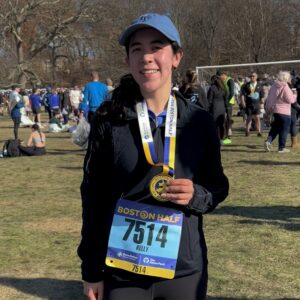
Outside of research, I love spending time with my dogs, running, and when the weather is nice, gardening. It’s challenging gardening on a city patio, but this summer my tomatoes, peppers, and basil have been growing nicely!
What advice would you give to your younger self?
I think impostor syndrome exists in every field, and I’ve particularly experienced this in science. I would encourage my younger self to focus less on comparing myself to others and more on recognizing my own strengths and areas of improvement. In graduate school, I have become more confident in my abilities and in presenting my research by challenging myself to seek new opportunities and by receiving guidance and feedback from my advisor, thesis committee, and colleagues.
What are your career goals?
After graduating, I plan to return to Boston to pursue a career in industry. My dream job would be to develop a hit generation platform that supports early-stage drug discovery. I am drawn to early discovery and assay development because they combine a fast-paced environment with opportunities to explore new ideas and to build something from the ground up. As one of world’s leading biotech hubs, Boston would give me the opportunity to work with cutting-edge technologies and to learn from researchers working at the forefront of drug discovery.
Learn more about the PhRMA Foundation’s fellowship and grant opportunities. Check out more researcher stories on our blog.