Q&A with Amandip Bangar: A New Immunotherapy Approach Targeting Lipids Instead of Proteins
June 9, 2026Amandip Bangar, an MD-PhD candidate at the University of Colorado, received a 2026 PhRMA Foundation Predoctoral Fellowship in Translational Medicine.
Why did you become a scientist?
I initially became a scientist out of curiosity. Biology was an interest of mine from a young age, and in college, I realized that becoming a scientist would allow me to discover things about our world that no one else knew. As my research career progressed, I focused on medicine and cancer research, turning scientific discoveries into tangible benefits for patients. Cancer is a particularly devastating disease that takes a toll on not just patients, but their families as well. It is a challenging disease to treat, with no shortage of complex biology to unravel and understand.
Provide a brief summary of your PhRMA Foundation-funded research.
The goal of my research is to develop therapies for acute myeloid leukemia (AML). This type of leukemia is particularly difficult to treat, in part because of its biology, but also because patients are typically older when diagnosed, averaging 69 years old. Leukemia in children has seen incredible improvements in survival, which have unfortunately not been seen in AML. The PhRMA Foundation has generously funded my research that aims to reprogram a patient’s immune cells to better kill AML cells. This type of therapy is known as cellular immunotherapy and has been a breakthrough for cancer therapy in the last decade. Patients treated with this type of therapy have experienced decade-long remissions that previously weren’t possible. My research is exploring the potential to retrain immune cells to target lipid molecules that are made by AML cells. Targeting these lipids represents a significant change in direction of cellular immunotherapy, which has relied on targeting proteins on cancer cells. If successful, my work will demonstrate the feasibility of targeting new molecules on AML cells and other cancer types.
Tell us an interesting story from your career journey.
Early on in my research career, I performed an experiment to study the function of immune cells inside of liver tumors. It was the first time I had used a technique called flow cytometry, which uses lasers and antibodies to measure the amount of protein on the surface of cells.I drastically underestimated the amount of time it would take me to perform. I ended up working from 7 a.m. until 3 a.m. the next morning to complete the experiment. I now do this type of experiment regularly, and it doesn’t take anywhere near as long as that first time. I find it humbling but also amusing looking back on the scientist I used to be compared to now.
What is a common misconception people have about science and why?
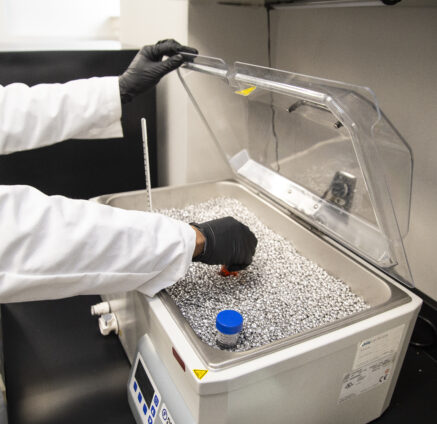
Science is not as glamorous as I think it’s depicted in media. Scientists can spend weeks or months with little to show for it, which in other fields and disciplines wouldn’t be acceptable. Science is synonymous with failure — most results never see the light of day. Scientific labs are also not as organized and clean as people might think. We have tubes, boxes, and equipment all over the place.
What do you love most about research?
Research is curiosity and ingenuity in its purest form. You get to work on difficult problems with unknown solutions. There is something incredibly fulfilling in working out creative solutions without an established blueprint or protocol.
What do you like to do outside of research?
Living in Colorado I’ve adopted the stereotypical lifestyle. I really enjoy the mountains whether it’s hiking or camping in the summer or skiing (poorly) in the winter.
What advice would you give your younger self?
Your belief in yourself will take you further than almost anything else will. Five years ago, I couldn’t imagine where I’d be now, and I’m sure five years from now I’ll be thinking the same thing.
What are your future career goals?
As an MD-PhD trainee, my goal is to become a physician-scientist in cellular immunotherapy. I hope to run a basic/translational research lab and have a clinical practice that includes treating patients with cancer. I’m particularly interested in interventional radiology, which is a specialty that performs minimally-invasive procedures to treat patients in nearly every part of the body. There are new treatments being developed that combine skillset of interventional radiologists with existing and developing immunotherapies to help improve patient outcomes.
Learn more about the PhRMA Foundation’s fellowship and grant opportunities. Check out more researcher stories on our blog.