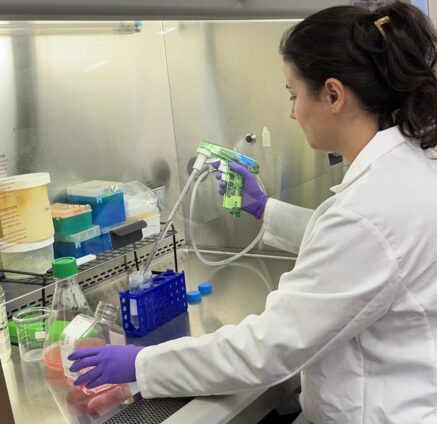
Q&A with Claire Fleming: Targeting an Immune Signal That Drives Severe Disease in COVID-19
December 11, 2025Claire Fleming, a PhD candidate at the University of Virginia, is studying why some people develop an overactive immune response and the biological signals behind this response in COVID-19.
You’re probably familiar with the phrase “everything in moderation,” but you might be surprised to learn that this axiom also applies to the human immune system. Our immune system is responsible for recognizing and fighting invading pathogens, but if it remains highly activated for too long, the immune response itself can cause tissue damage and disease.
Claire Fleming, MS, a PhD candidate at the University of Virginia, received a 2025 PhRMA Foundation Predoctoral Fellowship in Drug Discovery for her research on why some people develop an overactive immune response and the biological signals behind this.
Specifically, she is studying the signals that lead to an overactive immune response to SARS-CoV-2, the virus that causes COVID-19. When lung cells are damaged during infection, a protein in the lungs called interleukin-33 (IL-33) is released and activates the immune response. Using a mouse model of COVID-19, her lab found that blocking IL-33 helps protect from this overactive response. Fleming now seeks to determine how IL-33 drives severe COVID-19 disease and further our understanding of this potential therapeutic pathway.
Watch this video to learn more about Fleming and her research.
Learn more about the PhRMA Foundation’s fellowship and grant opportunities. Check out more researcher stories on our blog.