Q&A with Dr. David Nie: Turning Serendipity Into Scientific Breakthroughs
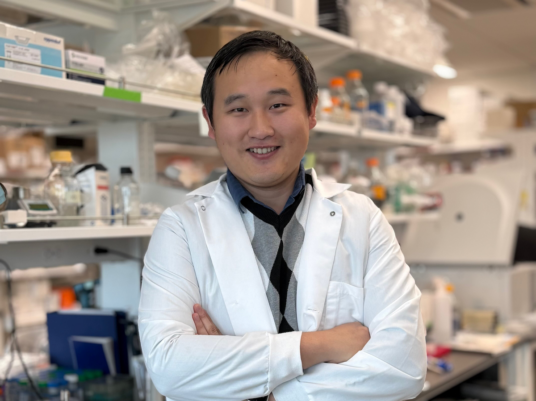
October 6, 2026Dr. David Nie of Yale University received a 2026 PhRMA Foundation Postdoctoral Fellowship in Drug Discovery for his research that aims to rewire specific proteins to turn on a cell’s cancer-fighting genes.
Provide a summary of your PhRMA Foundation-funded research.
Every cell in our body has an internal control system that decides which genes get turned on or off. In cancer, that system often goes haywire, switching on genes that drive uncontrolled cell growth. Conventional cancer drugs try to block or destroy the proteins responsible for regulating the system, but that strategy doesn’t always work. I am taking a different approach: Rather than blocking these proteins, I am developing molecules that hijack them, forcing them to activate the cell’s own built-in tumor suppressor genes. Think of it as turning a cancer cell’s own out-of-control machinery against itself. Because this approach specifically targets cells where this control system has gone haywire, we expect it to spare healthy tissue, potentially reducing the harmful side effects common with conventional treatments. If successful, this work could open the door to an entirely new class of selective targeted cancer therapies.
Why did you become a researcher?
I like the challenge of solving complex puzzles with real-world stakes, and I have always wanted a career that lets me push beyond my comfort zone and explore uncharted territory rather than follow established routines. I am also drawn to the thrill of coming up with an idea, testing it, and working toward results that might transform our understanding of a topic or deliver an innovation that creates a lasting impact. In this research, I am doing exactly that: taking a novel, high-risk idea and turning it into a potential new therapeutic strategy for cancer.
Tell us about a standout moment from your career journey.
During my PhD research, I experienced a plot twist in scientific discovery. I was screening sets of compounds meant to induce a specific cellular effect, including one intended as a control (a compound we expected to do nothing). Instead, that control compound turned out to be unexpectedly active. It was a moment of surprise, and at the time, we had no idea of the mechanism driving it. What followed was an investigation into that mystery, which eventually uncovered an entirely unique way these molecules work in cells. That serendipitous starting point ultimately paved the way for a novel drug design strategy and allowed us to develop a next-generation, highly potent compound with exceptional potential. It taught me a lesson I carry to this day: In science, unexpected surprises may just be a breakthrough in disguise.
What is a common misconception people have about science?
A major misconception is that science happens linearly through a planned, formulaic approach. In reality, discovery rarely goes in a straight line. It is often driven by intuition, spontaneity, trial and error, or serendipity. Often, we stumble upon something unexpected entirely by accident, and that surprise might become the next big breakthrough. Science sometimes relies on plans failing in unexpected ways, and having an open mind can be an invaluable asset.
What do you love most about research?
I love that special moment when you look at a new set of data and realize that you are the first person in the world to see this discovery and that you’ve found a new piece to complete the complex puzzle. There is nothing quite like seeing a hypothesis, an abstract concept, or an unexpected finding finally come to life in the lab, knowing that each discovery, however small, moves us closer to innovations that could change lives.
What do you like to do outside of research?
Growing up in Canada, I developed a deep appreciation for nature. I love hiking, camping, and going on road trips, whether I’m exploring the coast or venturing deep into the forest. In my spare time, I also enjoy films and documentaries, particularly those that offer fresh perspectives, provide insightful thoughts, or explore unfamiliar topics.
What advice would you give to your younger self?
The best advice I would give my younger self is to not be afraid to take risks or make mistakes, because uncertainty is simply part of the process. The most significant breakthroughs and innovations almost always come from exploring the unknown, taking chances, and embracing unconventional ideas. I would also tell myself to stay curious and be patient; the path rarely looks the way you expect it to.
What are your career goals?
My future career goal is to establish an independent research group focused on advancing the next generation of molecular therapeutics and therapeutic modalities. By pushing the boundaries of creative drug design, I aim to develop innovative treatments for diseases like cancer that remain difficult to cure and ultimately improve outcomes for patients who need better options.
Learn more about the PhRMA Foundation’s fellowship and grant opportunities. Check out more researcher stories on our blog.