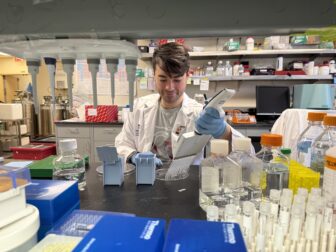
German Arenas, PhD

Piezo1 and Dysfunction of Myometrial Arteries by Fetal Growth Restriction
Abstract
Fetal growth restriction (FGR) is a pregnancy complication characterized by insufficient growth of the fetus. Impaired vasodilation of the myometrial arteries (MyoA), a key determinant of uteroplacental blood flow during pregnancy, contributes to FGR. Piezo1, a mechanosensitive cation channel, is essential in the shear stress-induced vasodilation but the role of Piezo1 in human MyoA remains unknown. We hypothesize that Piezo1-mediated vasodilation is impaired in human MyoA from FGR pregnancies and that Piezo1-mediated vasodilation in MyoA partially depends on large conductance calcium-activated potassium (BKCa) channel activation, a known regulator of uterine perfusion during pregnancy. We will determine the role of Piezo1/BKCa channel signaling in MyoA from healthy and FGR pregnancies using vasoreactivity assays, cell electrophysiology, and imaging. This innovative work may reveal a novel molecular target for future therapies to treat FGR, a condition lacking effective treatments.
Receiving this award from the PhRMA Foundation represents a significant opportunity at this early stage of my career, and I am deeply grateful for the confidence it demonstrates in my training and the trajectory of my research. With this support, I will be able to broaden the scope of our experiments, reinforce key collaborations, and generate the mechanistic insights necessary to translate fundamental discoveries into substantive advances in vascular biology. I am sincerely thankful to the PhRMA Foundation for its investment in early-career scientists and for enabling me to pursue this research at a critical juncture in my professional development.