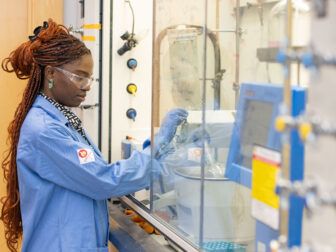
Damilola Olukorede

Machine Learning-Optimized Pikromycin Thioesterase for Macrocyclization
Abstract
Macrolides are a privileged class of natural products with broad therapeutic utility, yet their diversification remains constrained by the inefficiency of thioesterase (TE)-mediated macrocyclization and poor tolerance to non-native substrates. This project integrates machine learning, molecular dynamics, and experimental validation to engineer Pik TE mutants with improved cyclization efficiency and selectivity. Aim 1 develops predictive models that link structural descriptors to catalytic outcomes, enabling rational prioritization of beneficial mutations. Aim 2 applies these engineered TEs to cyclize unnatural hexaketides, followed by glycosylation and site-selective oxidation to generate novel macrolides. This research will provide insights into the structure-function relationship of enzymatic macrocyclization, apply machine learning to accelerate biocatalyst optimization, and generate novel macrolides with potential activity against resistant pathogens.
Watch a Q&A with Damilola
Receiving the PhRMA Foundation Predoctoral Fellowship in Drug Discovery is deeply meaningful to me because it represents both practical support for my research and a clear signal that the scientific questions I am pursuing matter beyond the academic setting. My focus as a researcher has always been to pursue science with the potential to benefit lives and have real-world impact. This award is a welcome affirmation that such impact is definitely achievable and that I am on the right path toward realizing this goal. I am especially grateful for this fellowship because I understand how selective the process is and what that selectivity represents. Being chosen reflects confidence in my academic preparation and also in the relevance, rigor, and translational promise of my research direction.