Q&A with Sergei Kutseikin: A New Approach to Treating Fatty Liver Disease
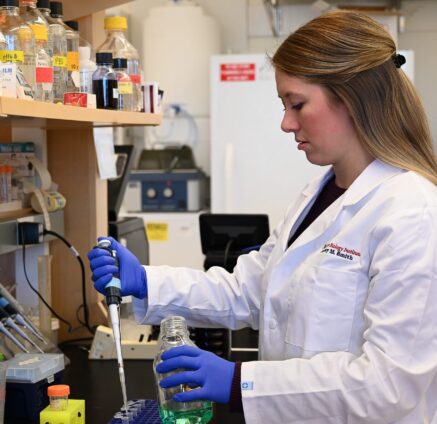
February 17, 2026Sergei Kutseikin, a PhD student at Scripps Research Institute, is researching new treatments for fatty liver disease, a condition where fat builds up in the liver, leading to inflammation, liver cell damage, and liver scarring.
Sergei Kutseikin grew up in a small coal-mining town in Siberia, where excelling at sports was usually the main path to success. “For years I actually trained to become a competitive kickboxer,” he said.
But in eighth grade, Kutseikin discovered his love for chemistry, and then in college, he realized he could use chemistry to better understand human disease biology. “That was a turning point for me,” he said. “I saw that I could apply my background in chemistry to solve complex biological problems.”
Now a PhD student at Scripps Research Institute, Kutseikin received a 2025 PhRMA Foundation Predoctoral Fellowship in Drug Discovery for his research on new treatments for fatty liver disease. Metabolic dysfunction-associated fatty liver disease (MAFLD) is a condition where fat builds up in the liver. In the severe form of the disease, called metabolic dysfunction-associated steatohepatitis (MASH), this buildup leads to inflammation, liver cell damage, and liver scarring.
These disorders are more common in people with metabolic conditions like obesity, and a common feature in obesity-linked organ defects is an imbalance in the cell’s natural stress response system. The lab where Kutseikin works has developed drugs that help fix this by boosting the protective signals of the stress response system. He will investigate these drugs in MAFLD/MASH mouse models and uncover their molecular mechanism of action.
Watch the video to learn more about Kutseikin and his research.
Learn more about the PhRMA Foundation’s fellowship and grant opportunities. Check out more researcher stories on our blog.