Q&A with Dr. Aakriti Gangwal: Developing Broad-Spectrum Antiviral Drugs to Prepare for Future Outbreaks
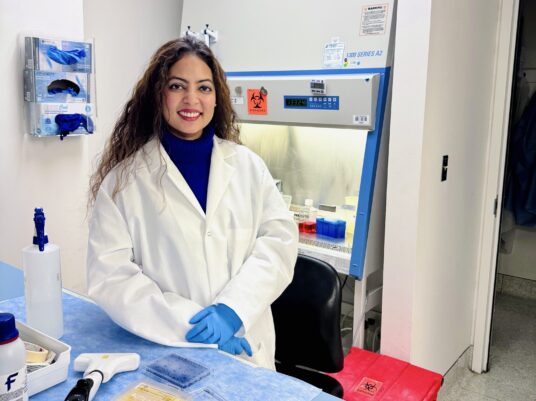
January 8, 2026Aakriti Gangwal, a postdoctoral fellow at Stanford University, received a 2025 PhRMA Foundation Postdoctoral Fellowship in Drug Discovery for her work to improve broad-spectrum antivirals.
Why did you become a scientist?
Becoming a scientist wasn’t a single event, it was more of a gradual process. Since high school, I’ve been fascinated by how the human body works and how invisible molecular pathways shape health and disease. That curiosity led me to biochemistry, and eventually to kinase biology. Kinases are enzymes that modify proteins, and this simple modification creates an incredible amount of complexity in how cells signal, adapt, and respond to external stimuli. What excites me the most is that many viruses hijack these kinase-driven pathways for their own replication, which makes kinases not only fascinating to study but also powerful therapeutic targets in infectious diseases.
Describe your PhRMA Foundation-funded research and the potential impact on patients.
My research focuses on how viruses hijack our own cellular machineries to replicate and spread. For most viruses, there are no approved antiviral treatments. Antivirals typically target one specific virus, and that’s the reason for the emergence of virus resistance. Instead of targeting the virus directly, our team is advancing strategies that target the host proteins that the viruses depend on. In particular, I focus on a family of understudied proteins called Numb-associated kinases (KAKs), which viruses use to enter and exit the cells. I study how NAKs regulate viral infection and the therapeutic potential of their inhibitors. By blocking the pathways that NAKs mediate with specific inhibitors, we observe antiviral effects not just against one virus but many different viruses. It’s interesting to note that while about 85% of human kinases are implicated in disease, only around 80 kinases out of approximately 500 have been explored as drug targets so far. This untapped potential could open the door to novel broad-spectrum antivirals, which are urgently needed for emerging infections.
What has been the impact of the PhRMA Foundation award for you?
The PhRMA Foundation postdoctoral fellowship award has been transformative for me. As a young scientist, you often have bold ideas but not always the resources to test them. Being selected for the award gave me confidence in my project and independence to take risks. Funding early-career researchers is vital because this is when creativity is at its peak, and supporting that can spark discoveries that might otherwise be missed.
What was a turning point in your career journey?
A turning point for me was during my PhD when I was working with some deadly bacterial pathogens that cause tuberculosis and anthrax. I remember the first time I walked into a biosafety facility in full protective gear, I felt both intimidated and thrilled. That moment made me realize that my curiosity outweighed my fear, and that I truly wanted to dedicate my career to tackling pathogens that are a threat to human health.
What are the aspects of your work that you find most fulfilling?
For me, research feels like solving a mystery of the human body — each experiment adds a clue, and every day brings a new learning experience. What I find most fulfilling is having the right tools and support to truly address meaningful scientific questions. I also deeply value the collaborative side of science — exchanging ideas, learning from others, and seeing how discoveries can evolve into something impactful. I’ve been very fortunate to have incredibly supportive mentors throughout my career, who not only guided me scientifically but also encouraged me to think independently and pursue ideas with confidence. That kind of environment makes the process of discovery even more rewarding.
What advice would you give young people who are curious about a career in research?
Stay curious and don’t be discouraged by setbacks — they’re part of the process. If you enjoy solving puzzles and thinking creatively, research can be incredibly rewarding. I’d also say, find good mentors and be open to collaboration and learning different fields.
What are your career goals?
My long-term goal is to keep working in environments — whether in academia, industry, or collaborations between the two — that share the mission of improving human health. I want to apply my knowledge about host-pathogen interactions and drug discovery to develop innovative therapeutic strategies. What matters most to me is being part of a team where discoveries can be translated into real-world solutions for patients. Ultimately, I see myself contributing to both advancing science and training the next generation of scientists, while keeping the focus on human health.
Learn more about the PhRMA Foundation’s fellowship and grant opportunities. Check out more researcher stories on our blog.